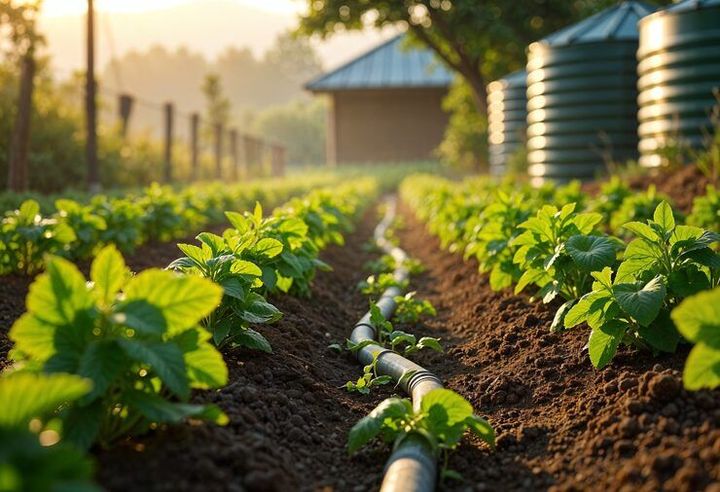
Guide to Smart Irrigation: Advice, Suggestions, and Resources for Effective Farming
Smart irrigation is an advanced agricultural practice that uses technology and data-driven solutions to manage water efficiently. Unlike traditional irrigation methods, which often rely on fixed schedules or visual observations, smart irrigation leverages sensors, automation, and software to deliver precise water amounts directly to crops based on real-time conditions.
Technologies involved in smart irrigation include soil moisture sensors, weather forecasting systems, automated sprinklers, drip irrigation networks, and irrigation management software. By combining these tools, farmers can monitor soil and plant conditions, adjust irrigation schedules, and reduce water and energy waste while maintaining healthy crop growth.

Why Smart Irrigation Matters Today
The adoption of smart irrigation is more important than ever due to environmental, economic, and social pressures. Key reasons include:
-
Water conservation: Reducing water wastage is essential in regions facing drought or water scarcity. Smart irrigation ensures that water is applied efficiently, conserving this critical resource.
-
Improved crop yields: Controlled and precise irrigation enhances plant growth, reduces stress from over- or under-watering, and helps farmers achieve better harvests.
-
Cost and energy efficiency: Automated irrigation reduces the need for manual labor and minimizes energy usage for water pumping, benefiting both small and large farms.
-
Climate change adaptation: Unpredictable rainfall patterns make traditional irrigation unreliable. Smart irrigation allows for dynamic adjustments based on real-time weather and soil data.
-
Environmental protection: By avoiding over-irrigation, farmers prevent nutrient runoff and soil erosion, which can harm surrounding ecosystems.
Smart irrigation affects various stakeholders:
-
Farmers and agricultural workers: Enhances productivity, reduces labor, and ensures crop quality.
-
Government agencies: Supports national water conservation goals and agricultural sustainability programs.
-
Environmental groups and communities: Promotes responsible water usage and reduces ecological damage.
Table: Benefits of Smart Irrigation
| Benefit | Description |
|---|---|
| Water conservation | Reduces wastage by delivering precise water amounts |
| Enhanced crop yield | Optimizes soil moisture for plant growth |
| Energy efficiency | Minimizes pumping energy and operational costs |
| Labor savings | Automation reduces manual irrigation work |
| Environmental protection | Prevents nutrient runoff and soil degradation |
Recent Trends and Updates in Smart Irrigation
Over the past year, smart irrigation has seen several notable developments:
-
Integration of AI and IoT (2024): Farmers increasingly use artificial intelligence to predict crop water needs. IoT-enabled sensors monitor soil moisture, temperature, and crop health in real time, allowing for automatic adjustments.
-
Satellite-based irrigation monitoring (2024–2025): Satellite imagery and remote sensing provide large-scale analysis of crop water usage and soil conditions, particularly for commercial farms.
-
Mobile and cloud-based irrigation apps (2025): Many apps now offer real-time irrigation schedules, weather integration, and historical water usage data to optimize irrigation management.
-
Government and private sector initiatives (2024–2025): Programs to encourage precision agriculture, water-efficient farming, and sustainable irrigation practices are expanding globally.
-
Focus on drought-prone regions: Smart irrigation adoption is increasing in areas experiencing water shortages, especially in Asia, Africa, and parts of North America.
Smart Irrigation Laws and Policies
Government rules and programs significantly influence smart irrigation adoption. These regulations aim to ensure sustainable water use, protect agricultural productivity, and encourage technology adoption:
-
Water use regulations: Many countries have guidelines limiting water withdrawal from rivers, lakes, and groundwater. Smart irrigation helps farmers comply with these regulations by reducing wastage.
-
Subsidies and incentives: Some governments provide financial support for farmers investing in precision irrigation systems, soil sensors, and automation equipment. Programs vary by region, such as the Pradhan Mantri Krishi Sinchai Yojana (PMKSY) in India, which promotes efficient irrigation practices.
-
Environmental compliance: Regulations on nutrient runoff and soil erosion require farmers to adopt sustainable irrigation methods, aligning with environmental protection laws.
-
Data privacy and IoT policies: As smart irrigation relies on sensors and cloud platforms, local data protection laws influence how farms collect and store information about crops and soil conditions.
Adhering to these laws ensures responsible water management and minimizes environmental impact while promoting long-term agricultural sustainability.
Tools and Resources for Smart Irrigation
Numerous tools and resources help farmers plan, implement, and monitor smart irrigation systems:
-
Soil moisture sensors: Devices that measure soil water content and transmit data to irrigation controllers.
-
Weather-based controllers: Systems that adjust irrigation schedules based on real-time weather conditions and forecasts.
-
Irrigation management software: Cloud-based platforms provide irrigation recommendations, track water usage, and generate reports.
-
Mobile apps: Apps like CropX, HydroPoint, and Rachio Smart Irrigation integrate weather data and soil sensors for real-time management.
-
Water use calculators: Online calculators help estimate crop water requirements, irrigation scheduling, and potential water savings.
-
GIS and satellite tools: Remote sensing platforms like Sentinel-2 and Landsat allow large-scale analysis of soil moisture and crop health.
-
Guides and templates: Farmers can access irrigation schedules, crop-specific water requirement tables, and checklists to improve water efficiency.
Table: Key Smart Irrigation Tools
| Tool Type | Purpose |
|---|---|
| Soil moisture sensor | Measures water content in soil |
| Weather-based controller | Adjusts irrigation based on weather forecasts |
| Irrigation management app | Monitors and schedules irrigation |
| Water use calculator | Estimates water requirements and savings |
| Remote sensing platforms | Provides large-scale soil and crop analysis |
By leveraging these tools, farmers can enhance precision, reduce resource waste, and maintain optimal crop health.
Frequently Asked Questions About Smart Irrigation
What is the difference between traditional and smart irrigation?
Traditional irrigation typically uses fixed schedules, often leading to over- or under-watering. Smart irrigation relies on data from sensors, weather forecasts, and software to provide precise water amounts tailored to crop and soil needs.
Which crops benefit most from smart irrigation?
While nearly all crops benefit, high-value crops like fruits, vegetables, and specialty grains see significant gains in yield, water efficiency, and quality when using smart irrigation.
How much water can smart irrigation save?
Studies indicate smart irrigation can reduce water usage by 20–50% compared to traditional methods, depending on crop type, climate, and soil conditions.
Is smart irrigation expensive to implement?
While initial setup costs can be higher due to sensors and automation, long-term savings in water, labor, and energy often outweigh the investment. Government subsidies may also reduce upfront costs.
Can smart irrigation adapt to changing weather conditions?
Yes. Smart irrigation systems use weather forecasts and real-time soil data to adjust watering schedules automatically, helping crops withstand droughts or unexpected rainfall.
Conclusion
Smart irrigation represents a transformative approach to water management in agriculture. By combining technology, data, and sustainability principles, it addresses critical challenges like water scarcity, climate change, and environmental protection. Farmers, governments, and communities all benefit from adopting smart irrigation through increased crop yields, resource efficiency, and ecological preservation.
Recent trends, such as AI integration, mobile apps, and satellite monitoring, are making smart irrigation more accessible and effective. Adherence to local regulations and government programs ensures responsible use and maximizes benefits. With the right tools, data, and strategies, smart irrigation can play a pivotal role in shaping a more sustainable and productive agricultural future.