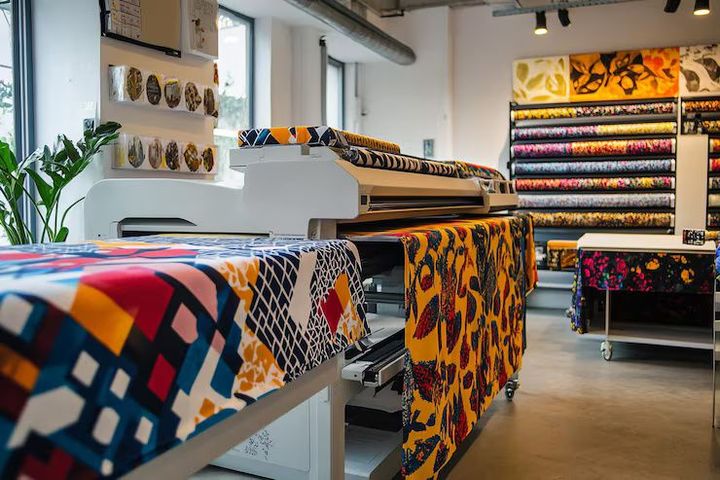
Industrial Garment Printer Guide: Helpful Insights, Suggestions, and Explanation
Industrial garment printers, primarily operating on Direct-to-Garment (DTG) technology, are sophisticated digital textile printing systems. This technology represents an evolution from traditional methods like screen printing, enabling the high-speed application of full-color, intricate designs directly onto finished apparel, such as T-shirts, hoodies, and polo shirts
Unlike analog processes, industrial DTG printing uses specialized inkjet printheads to jet water-based pigment inks onto fabric substrates, much like a large-format paper printer. The "industrial" designation signifies machines built for high-volume production and continuous operation, often featuring automated pre-treatment and curing steps integrated into the workflow.

Importance and Impact on the Global Apparel Industry
The proliferation of industrial garment printers is a critical factor in today's textile and apparel landscape, affecting businesses from global fashion brands to small e-commerce entrepreneurs. This technology solves several traditional production problems and is a powerful driver of key industry trends:
Enabling Customization and Personalization: DTG makes it economically feasible to print single-item orders with high-resolution digital artwork. This capability directly addresses the soaring consumer demand for personalized and unique clothing that reflects individual style, a trend driving significant market growth.
Reduced Inventory and Waste: By facilitating on-demand production and short-run manufacturing, DTG minimizes the need for businesses to hold large, speculative inventories. Garments are printed only when an order is placed, significantly reducing the risk of overstocking and textile waste—a major environmental concern in the fashion industry.
Faster Time-to-Market: The digital workflow eliminates the time-consuming setup required for screen printing (creating screens, mixing custom inks, etc.). This efficiency drastically accelerates the turnaround time, allowing businesses to respond quickly to new fashion trends and seasonal demands, which is vital in the fast-paced e-commerce environment.
Who It Affects: Print service providers, apparel decorators, fulfillment centers for print-on-demand e-commerce brands, and fashion companies embracing micro-factory production models are the primary users and beneficiaries of industrial DTG systems.
The global DTG printing market size, as of 2024, is valued in the billions of US dollars, with significant continued growth projected over the next decade, underlining its central role in the future of textile manufacturing.
Recent Updates, Trends, and Technological Advancements
The industrial garment printing segment continues to evolve rapidly, driven by innovation in hardware and chemistry. Key updates and trends from the past year (late 2024–2025) include:
Increased Speed and Automation: Manufacturers are focusing on higher-speed, single-pass DTG printing to better compete with traditional methods on long runs. New models, such as those introduced by major players like Brother and Epson, feature enhanced printheads and automated processes like garment thickness detection to improve efficiency and reduce operator intervention.
Expanded Material Compatibility: Traditionally optimized for 100% cotton, DTG technology is expanding its reach. Advances in pigment ink formulations and pre-treatment chemistries are enabling high-quality, durable printing on challenging synthetic fabrics like polyester and various cotton blends, a critical factor for the growing sportswear and athleisure markets.
The Rise of Digital Textile Eco-Systems: There is a pronounced trend toward fully digital, integrated workflows. This includes tighter integration between industrial DTG hardware and web-to-print software platforms, which automate everything from customer design submission and order management to print file preparation and final production tracking.
Sustainability Focus: Driven by consumer and regulatory pressure, manufacturers are prioritizing eco-friendly printing solutions. This includes the wider adoption of water-based pigment inks that meet stricter environmental compliance standards, as well as developing systems that minimize water usage and chemical discharge.
Laws, Policies, and Regulatory Compliance
Industrial garment printing operations must navigate an increasing number of regulations, particularly concerning chemical usage and environmental impact, both domestically and internationally (e.g., US and EU). Compliance is not only a legal requirement but also a competitive advantage for brands seeking to meet consumer demand for ethically and sustainably produced apparel.
Chemical and Ink Regulations: The most direct impact comes from regulations governing the chemical safety of inks and finished products.
OEKO-TEX® Standard 100 certification and similar standards verify that textile products, including inks, do not contain harmful substances at concentrations that can be detrimental to human health. While voluntary, achieving this compliance is nearly mandatory for major apparel brands.
The Environmental Protection Agency (EPA) in the US and the Registration, Evaluation, Authorisation and Restriction of Chemicals (REACH) regulation in the EU place strict limits on toxic substances like heavy metals and certain chemicals (e.g., PFAS) used in textile processes. DTG shops must ensure their water-based inks and pre-treatment solutions are compliant.
Water and Waste Management: As DTG inks are water-based, there are considerations for wastewater discharge, particularly for facilities that handle large volumes of wash-down and cleaning fluids. Strict local and national environmental guidelines often dictate the proper disposal or pre-treatment of this effluent.
Sustainability Directives (EU and US): Recent legislative movements focus on the entire lifecycle of textiles:
EU Ecodesign Regulation (2024): This introduces requirements for product durability, reparability, and recyclability, pushing textile manufacturers, including printers, to design products with a reduced environmental footprint.
Extended Producer Responsibility (EPR) Schemes: Laws in the EU and proposed laws in certain US states require manufacturers and brands to financially contribute to the collection and recycling of textile waste, which can impact the ultimate material choices and printing methods employed.
Essential Tools, and Resources for Workflow Optimization
Maximizing the throughput and quality of an industrial DTG operation relies heavily on integrating specialized software and tools into the production workflow.
Software and Workflow Tools
RIP (Raster Image Processor) Software: This is perhaps the most critical software tool. It interprets the design file (e.g., a JPEG or PNG), converts it into a format the printer can understand, manages color calibration (including the critical white underbase layer), and optimizes ink consumption for the specific garment type.
Web-to-Print/Design Tool Integration: Software that allows customers to design their apparel online and automatically creates a print-ready file, calculates pricing, and pushes the order directly into the production queue (Job/Order Management System).
Shop Management Software (MIS): Comprehensive systems designed to track orders, schedule production runs, manage inventory (blanks, inks, pre-treatment), track labor time, and generate business reports.
Physical Tools and Resources
Automated Pre-treatment Machines: For industrial-scale black or dark garment printing, automated sprayers apply a precise, consistent amount of pre-treatment fluid to the fabric before printing. This consistency is essential for print quality, color vibrancy, and wash fastness.
Tunnel Dryers/Conveyer Ovens: Industrial curing is necessary to permanently affix the water-based ink to the textile fibers after printing. Conveyer ovens offer a high-volume, continuous process for curing compared to individual heat presses.
Color Spectrophotometers: Tools used for precise color management and calibration, ensuring that the colors printed match the digital artwork file and remain consistent across different production batches and multiple machines.
Frequently Asked Questions (FAQs) in Industrial Garment Printing
What distinguishes an "industrial" garment printer from a "commercial" one?
Industrial garment printers are engineered for extremely high-volume production, continuous operation, and maximum reliability. They often feature larger print areas, multiple printheads, integrated automation for pre-treatment and curing, and a higher garments-per-hour output rating than commercial-level printers, which are typically designed for mid-volume or entry-level production.
What is the role of the pre-treatment process in DTG printing?
Pre-treatment is a specialized liquid solution applied to dark-colored garments (and sometimes light synthetics) before printing the white underbase ink layer. Its primary function is to chemically stabilize the cotton fibers, preventing the white ink from soaking too deeply into the garment and ensuring it cures brightly and firmly on the surface. This step is fundamental to achieving vibrant colors and excellent wash durability on dark fabrics.
How does DTG printing compare to Direct-to-Film (DTF) printing?
DTG prints the ink directly onto the garment fabric, resulting in a soft, breathable finish that is integrated into the textile. DTF involves printing an image onto a film, applying an adhesive powder, and then heat-pressing the film onto the garment. DTF is typically more versatile across different fabric types and requires no garment pre-treatment, but the print often has a thicker, more vinyl-like feel compared to the softer hand of a DTG print on cotton.
What are the primary factors that determine the ultimate quality of a DTG print?
Print quality is a function of several interconnected factors: the resolution and condition of the printheads, the quality and color profile of the pigment inks, the consistency of the pre-treatment application, and the correct curing time and temperature in the final heat press or tunnel dryer. Using high-quality source artwork and proper RIP tool settings is also essential.
Conclusion
Industrial garment printers represent a significant technological advancement in the textile sector, driving the modern trend of mass customization and on-demand apparel production. By offering the flexibility to produce personalized, high-detail graphics with a reduced environmental footprint compared to traditional high-volume methods, DTG technology has become a cornerstone of agile manufacturing. Success in this field relies on understanding the continuous advancements in automation and ink technology, maintaining a precise, efficient digital workflow, and proactively ensuring compliance with evolving global sustainability regulations. The integration of high-speed hardware with smart software is the future of profitable and responsible apparel decoration.