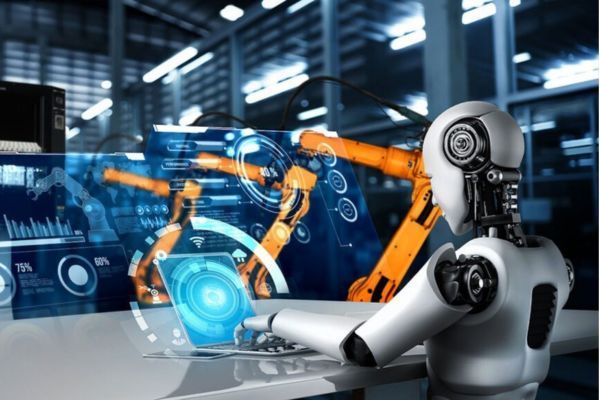
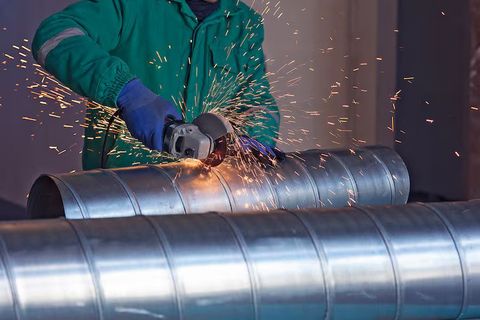
Historically, robots in industry trace back to early automation in assembly lines, but modern industrial robotics evolved with advances in computer control, sensor technology, and artificial intelligence. In today’s landscape, these robots support a wide range of applications — from welding, painting, and packaging to precision assembly and inspection.
Importance
Industrial robots matter today for several compelling reasons:
Boosting Efficiency and Productivity
Robotics in industrial automation helps manufacturers produce more with less human fatigue or error. Robots can operate continuously, maintain precise tolerances, and execute tasks faster than manual labor in many cases.
Enhancing Safety
Many industrial tasks involve hazardous environments — extreme heat, toxic chemicals, or heavy loads. Robots can handle such tasks, reducing risks to human workers and minimizing workplace accidents.
Improving Quality and Consistency
By repeating the same motion precisely, industrial robots improve product consistency and reduce defect rates. This helps in achieving high-quality manufacturing and reducing waste.
Supporting Innovation and Competitiveness
In a global economy, companies that adopt robotic manufacturing can stay competitive. Robotics enables more flexible production lines that can adapt to changing demands, customized products, and shorter lead times.
Sustainability and Resource Efficiency
Robots can optimize material usage, reduce scrap, and lower energy consumption per unit produced. This aligns with sustainability goals and efficient resource management.
Who It Affects
-
Manufacturers: across automotive, electronics, logistics, pharmaceuticals, food & beverage, and more.
-
Supply Chain Managers: through more reliable production workflows.
-
Workforce: by reshaping job roles (less repetitive work, more technical oversight).
-
Policy Makers & Regulators: because of safety, labor, and economic implications.
Recent Updates
Over the past year (2024–2025), several noteworthy trends and developments have shaped the industrial robotics landscape:
-
Increased Adoption of AI-Driven Robots: More manufacturers are integrating artificial intelligence and machine learning into robotic systems to enable smarter decision‑making, predictive maintenance, and adaptive control.
-
Collaborative Robots (Cobots) Growth: There is a rising trend in deploying collaborative robots that work alongside humans safely, especially in small and medium-sized enterprises (SMEs).
-
5G and Edge Computing Integration: With the rollout of 5G networks, robots are increasingly connected via low-latency wireless communication, enabling real‑time data exchange and remote control.
-
Sustainability Initiatives: Companies are investing in energy‑efficient robotic systems to reduce carbon footprint. Some newer robot models are designed to draw less power and use regenerative braking.
-
Government Incentives & Grants: Several governments have expanded their grants and subsidies for industrial automation to boost local manufacturing. For example, policy programs promoting “Industry 4.0” adoption have increased, offering financial and tax incentives.
-
Supply Chain Challenges: The after-effects of global supply chain disruptions (stemming from geopolitical tensions and pandemic impacts) have accelerated on‑shoring of robotic manufacturing to reduce dependency on distant suppliers.
Laws or Policies
Industrial robotics is influenced by a variety of rules, regulations, and government programs, which vary by country. Key regulatory areas include:
Safety and Standards
-
Many countries enforce safety standards such as ISO 10218 (robots and robotic devices — industrial robots) and ISO/TS 15066 (collaborative robots). These standards govern safe design, operation, and human‑robot interaction.
-
Workplace safety agencies (for example, OSHA in the US) may require risk assessments and safety evaluations before deploying robots in production lines.
Data & Connectivity Compliance
-
As robots become networked devices, data protection and cybersecurity policies apply. Manufacturers must ensure secure communication, especially when robots are connected over wireless networks.
-
In the European Union, compliance with GDPR may arise if robotic systems process personal data (for example, through vision systems that capture images of workers).
Government Support Programs
-
Many governments run “Industry 4.0” or smart manufacturing initiatives. These may include tax breaks, grants, or loans to encourage adoption of automation and robotic manufacturing.
-
Export controls may apply for advanced robotic systems that are classified as dual‑use technologies (civilian and military).
Trade and Import Regulations
-
Import tariffs on industrial robots or robotics components may influence adoption decisions.
-
Export regulations may restrict sale of advanced robotics across certain borders due to strategic or security concerns.
Tools and Resources
To understand or work with industrial robots more deeply, here are useful tools, platforms, and resources:
Simulation & Design Software
-
Robot Simulation Tools such as RoboDK, Gazebo, or MATLAB Robotics Toolbox help users model robot behavior, plan motion paths, and test scenarios.
-
CAD Software like SolidWorks or Fusion 360 lets engineers design parts and integrate them with robotic work cells.
Learning Platforms
-
Online Courses and MOOCs: Platforms such as Coursera, edX, and Udacity offer courses on robotics, automation, and control systems.
-
Textbooks and Reference Material: Standard textbooks like “Introduction to Robotics: Mechanics and Control” provide foundational knowledge.
Standards & Guidelines
-
ISO Website: The international standards organization publishes key standards (e.g., ISO 10218, ISO/TS 15066) that are essential for safe robot deployment.
-
Safety Assessment Tools: Templates and checklists for risk assessment provided by regulatory agencies help in evaluating hazards in robotic work cells.
Community & Research
-
Robotics Conferences and Journals: Conferences (e.g., IROS, ICRA) and journals (e.g., IEEE Robotics and Automation Letters) provide insight into cutting‑edge research.
-
Open‑Source Robotics Projects: Communities like ROS (Robot Operating System) offer libraries, simulation environments, and shared code for robot development.
Government & Funding Resources
-
National Innovation Agencies: Entities in many countries offer grants or advisory support for automation projects.
-
Policy Centers & Think Tanks: Institutions that publish reports on trends in industrial automation and robotics policy, helping stakeholders understand regulatory risks and opportunities.
Frequently Asked Questions
What is an industrial robot?
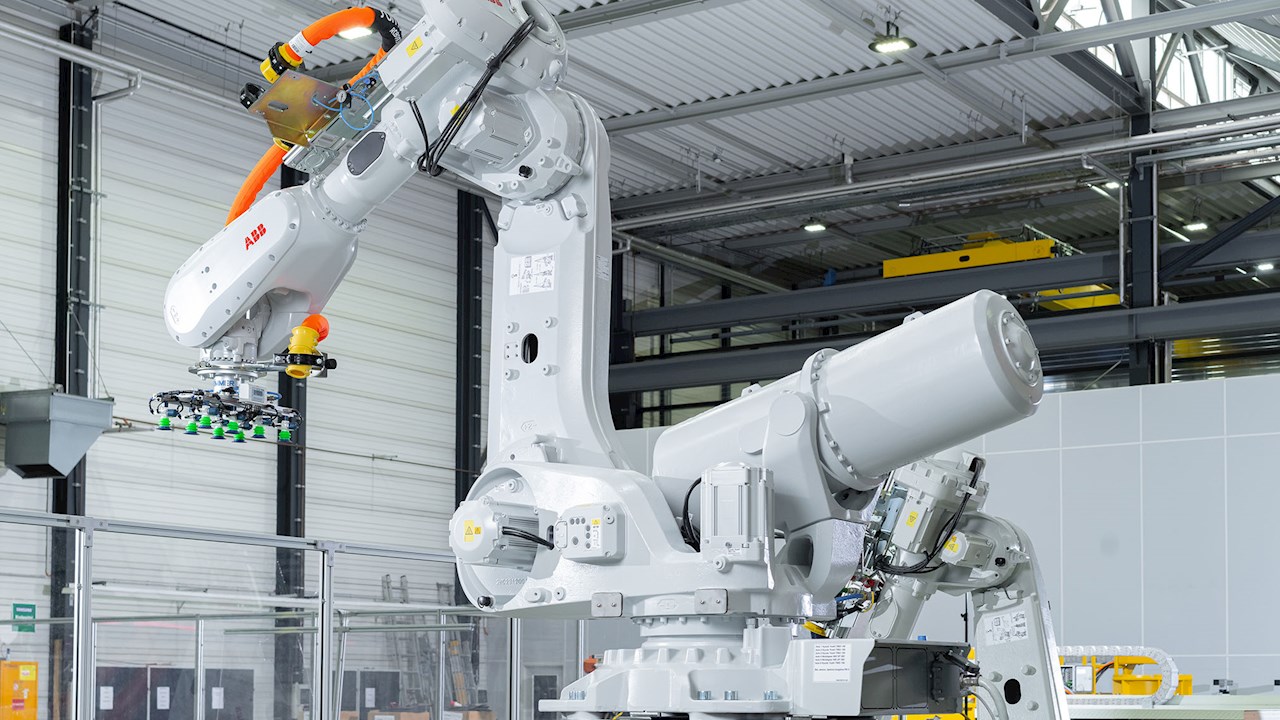
An industrial robot is a programmable machine, often with multiple axes (joints), designed to perform tasks such as welding, painting, assembling, or packaging in manufacturing settings. These robots are typically used in controlled environments to carry out repetitive or hazardous tasks with high precision.
How do industrial robots differ from collaborative robots?
Industrial robots are usually large, enclosed, and operate in restricted areas to avoid risk to humans. Collaborative robots, or “cobots,” are designed to work alongside humans safely, with built‑in sensors and speed limitations to detect and respond to human presence.
Why are industrial robots important for modern manufacturing?
Robotic automation improves efficiency, consistency, and throughput. It enhances safety by taking over dangerous tasks, reduces defects through precise repeatability, and allows more flexible production, making it easier to adjust to changing product demands or batch sizes.
What risks or challenges are associated with industrial robots?
Key challenges include safety hazards, such as collisions if risk is not managed properly; cybersecurity risks when robots are networked; and the need for skilled technical staff to design, program, maintain, and monitor robots. There is also the challenge of initial planning and integration into existing production lines.
Where can someone learn to design or control industrial robots?
Learning resources include robotics courses on MOOCs (Coursera, edX), robotics textbooks, simulation tools (RoboDK, MATLAB), and development platforms like the Robot Operating System (ROS). These provide theoretical foundations, practical simulations, and code libraries for building and controlling robots.
Conclusion
Industrial robots play a critical role in the ongoing transformation of manufacturing through automation. Their ability to carry out precise, repetitive, and potentially dangerous tasks helps companies boost productivity, improve quality, and ensure worker safety. Emerging trends—such as AI integration, collaborative robots, and connected systems—are pushing the field forward, while global regulatory frameworks and safety standards guide safe deployment. For those curious or aiming to work with industrial robotics, numerous resources are available: simulation software, educational platforms, standards documentation, and research communities. As industries continue to evolve, understanding and embracing industrial automation is increasingly central to global competitiveness, innovation, and sustainability.