Warehouse Inventory Tracking Information: Explore Guidance, Details, and Best Practices
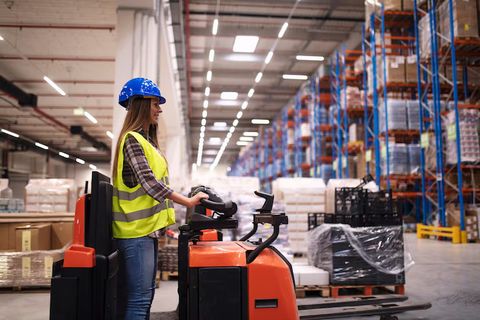
Warehouse inventory tracking refers to the processes and systems by which goods stored in a warehouse are monitored—how much is in stock, where it is located, when it was received, when it moves out, and its condition. A warehouse picks up items, receives them, stores them, moves them and dispatches them. Inventory tracking exists because businesses must align supply and demand, avoid loss or damage, maintain accurate records and deliver goods at the right time. Without tracking, warehouses become opaque: items may go missing, records might not match physical stock, and fulfilment suffers.
Tracking spans from simple spreadsheets to sophisticated software and automated hardware (e.g., barcode scanners, RFID, IoT sensors). It supports key warehouse operations: receiving, storing, picking, packing, shipping and returns.

Importance
Effective inventory tracking matters today for several reasons:
-
Reducing errors and losses: Incorrect counts lead to misplaced inventory, stockouts (no product when needed) or overstocking (tying up capital).
-
Meeting customer expectations: Businesses must fulfil orders quickly and reliably; lack of visibility in inventory can lead to delays and customer dissatisfaction.
-
Supporting cost‑control and efficiency: Warehouses often make up a significant portion of supply‑chain costs. Tracking helps optimise storage, movement, labour and minimise waste.
-
Cross‑functional impact: Gets operations, finance, sales and supply chain aligned—knowing what inventory you have, where it is, and when you’ll need more.
-
Who it affects: Warehouse managers, logistics and supply‑chain professionals, inventory controllers, and ultimately the business lines that depend on inventory availability (retail, manufacturing, e‑commerce).
-
What problems it solves: It helps avoid mismatches between recorded and actual stock, minimises idle or obsolete stock, improves order accuracy, supports auditing and accountability, aids forecasting and replenishment decisions.
Here’s a simple comparative table illustrating some typical outcomes:
| Without good tracking | With good tracking |
|---|---|
| Frequent stockouts/mis‑picks | Accurate counts → timely fulfilment |
| Manual, error‑prone paper logs | Automated/barcode scanning → lower human error |
| Poor visibility of “where items are” | Real‑time location & status of goods |
| High holding costs or obsolescence | Optimised stock levels, fewer write‑offs |
| Difficult audits | Clear records, cycle counts, reconciliations |
Recent Updates
In the past year (2024–2025) several trends and changes have shaped warehouse inventory tracking:
-
Adoption of automation: Technologies such as autonomous mobile robots (AMRs), automated guided vehicles (AGVs) and smart conveyance systems are increasingly used to move goods and track inventory movement.
-
Use of AI and predictive analytics: Inventory tracking systems are integrating AI/ML to forecast demand, identify potential stock‑issues, and optimise placement of goods in warehouses.
-
Increased real‑time, cloud‑based solutions: The shift from periodic manual counts toward continuous tracking, mobile devices, sensors, and cloud‑platforms for visibility.
-
Focus on sustainability and efficiency: Warehouses aim to reduce waste, energy usage, and optimise space, which ties in with better tracking of goods (age, turnover, condition).
-
In India: The regulatory environment is evolving (discussed next) and the handbook of warehousing standards was updated June 2025.
These updates mean that inventory tracking is not just “count and record” but increasingly about visibility, intelligence, and responsiveness.
Laws or Policies
In India, warehouse inventory tracking and warehousing operations are governed by several legal and regulatory frameworks:
-
The Warehousing (Development and Regulation) Act, 2007 lays down provisions for the development and regulation of warehouses, negotiability of warehouse receipts, registration of warehouse‑business operators, record‑keeping duties of warehousemen, etc.
-
The Warehousing Development and Regulatory Authority (WDRA) established under the Act has functions that include registering warehouses, accreditation, ensuring record‑keeping and other obligations.
-
Under the Act, every warehouseman must “keep in a place of safety a complete and accurate set of records and accounts of all goods” stored.
-
Other applicable laws include the Legal Metrology Act, 2009 (for weights/taxes/measure standards), standards for storage, fire‑safety, worker safety, and local building / environmental regulations.
The 2025 e‑Handbook of warehousing standards provides specific standards for storage location, handling, instrumentation and tracking in warehouses.
For inventory tracking specifically, compliance means accurate record‑keeping, audit trails, traceability of goods, controls for perishable/hazardous goods, and integration with warehouse receipts where applicable.
Tools and Resources
Here are some helpful tools, apps, templates and resources that support warehouse inventory tracking:
-
Barcode/RFID systems: Mobile scanners and tag systems to capture inventory movements and update records instantly.
-
Warehouse Management Systems (WMS): Software that tracks inventory location, status, movements, picking, packing, shipping.
-
Cycle‑count templates and audit checklists: Many online resources provide standard templates for periodic counts and reconciliations.
-
Analytics dashboards: Software modules or dashboards that show stock‑turnover, ageing inventory, discrepancy rates, location efficiency.
-
Cloud/mobility platforms: Allow warehouse staff to use tablets or smartphones to scan items, log transactions, update systems in real time (emphasised in recent articles).
-
Regulatory handbooks: For India, the e‑Handbook of Warehousing Standards (June 2025) is a key reference.
Industry articles and guides:
-
“6 Best Practices for Warehouse Inventory Tracking” (Camcode, 7 months ago) – covers technology, audits, training.
-
“Inventory Tracking Best Practices” (RFgen, 11 months ago) – covers standardised processes, technology solutions.
-
-
Training & workshops: Many accreditation agencies and warehousing bodies run training for warehouse personnel on record‑keeping, auditing, and systems integration.
FAQs
Q1: What is the difference between inventory tracking and inventory management in a warehouse?
A: Inventory tracking refers specifically to monitoring where items are, how many there are, their condition and movement over time. Inventory management is broader—it includes planning, forecasting demand, deciding how much to order, which items to stock, when to replenish, and how to allocate stock. Tracking is a crucial component of management.
Q2: How often should a warehouse perform inventory counts or audits?
A: It depends on turnover rate, value of items, and business risk. A “cycle count” approach—counting small subsets regularly—is often recommended over a once‑a‑year full count.
Q3: What technologies are most useful for improving inventory tracking accuracy?
A: Technologies include barcode scanners, RFID tags, mobile devices, real‑time location systems (RTLS), IoT sensors, and software platforms (WMS) that integrate with warehouse operations. These reduce manual entry errors and provide better visibility.
Q4: How does tracking inventory help reduce costs?
A: By ensuring the right amount of inventory is held (avoiding over‑stocking), reducing losses from mis‑picking or damage, improving space utilization, speeding up picking/packing, and improving order accuracy—all of which translate into cost savings.
Q5: What are common mistakes in inventory tracking that organisations should avoid?
A: Some common errors include: relying on manual spreadsheets without automation; neglecting to update inventory after each movement; poor location tracking within the warehouse; failing to reconcile physical counts with system records; ignoring data from audits and not acting on discrepancy alerts.
Conclusion
Warehouse inventory tracking is a foundational component of effective warehouse operations. It exists to provide visibility, accuracy, and control over goods stored, moved and dispatched. With growing pressure from customers, tighter supply‑chains, and increasing complexity, the importance of reliable tracking cannot be overstated. Regulatory frameworks in India require proper record‑keeping and adherence to standards, reinforcing the need for robust systems. Modern trends—from automation to AI—are making tracking more intelligent and efficient. By leveraging appropriate tools, adopting best practices and maintaining consistent monitoring and audits, organisations can minimise risk, reduce costs and enhance service levels. Ultimately, good inventory tracking supports broader business goals by ensuring that the right goods are in the right place, at the right time, in the right quantity.