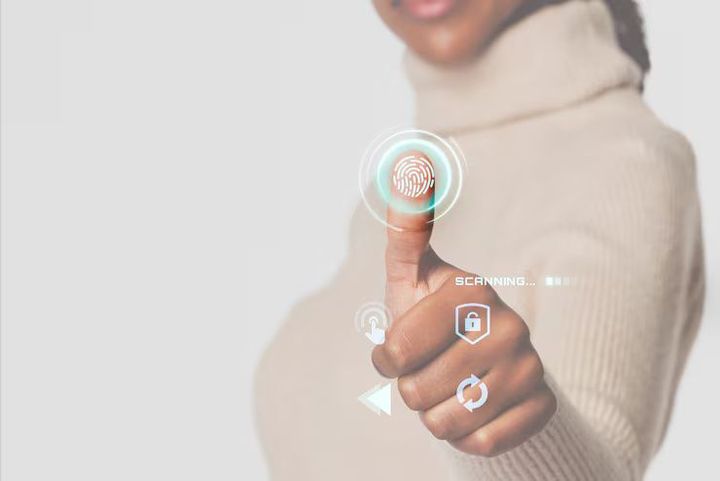
Digital Identity Verification: A Complete Knowledge Guide and Overview
Digital Identity Verification (DIV) is the process of confirming a person’s identity remotely and securely in the online world, without the need for a physical, face-to-face interaction. Essentially, it is how online businesses, institutions, and governments confirm that a user is genuinely who they claim to be when accessing services or creating an account digitally
It exists primarily to bridge the trust gap in remote transactions. The core goal is to compare the identity information provided by an individual (like a government ID, name, or date of birth) with authoritative, trusted data sources to ensure its validity and to confirm that the person presenting the information is its true owner. This process often combines multiple technical methods to achieve a high degree of assurance.

The Crucial Importance of Digital Identity Verification
Digital identity verification is a foundational element for the modern digital economy. It is not just an added security measure; it is a critical enabler of secure, efficient, and compliant online operations.
Why This Topic Matters Today
The significance of robust DIV systems is driven by two main factors: the accelerating volume of online transactions and the sophisticated nature of modern identity fraud and cybercrime. Without reliable verification, the entire digital ecosystem is vulnerable to significant financial loss and loss of trust.
Who It Affects and The Problems It Solves
Digital Identity Verification affects a wide range of stakeholders:
Financial Institutions (Banks, FinTech): They rely on DIV for customer onboarding, account opening, and high-value transactions to comply with regulations and prevent Anti-Money Laundering (AML) and Know Your Customer (KYC) violations.
Consumers/Users: Individuals benefit from faster, more convenient access to services (e.g., opening a bank account in minutes) and greater protection against identity theft and unauthorized account access.
Businesses (E-commerce, Gig Economy, Telecommunications): They use it to prevent marketplace fraud, verify the age of users, and ensure that individuals signing up for services are legitimate.
Governments: Public services use DIV to securely deliver benefits, verify citizenship, and issue official digital documents, enhancing the efficiency of public administration.
Key Problems Solved by DIV
Fraud Prevention: It is the primary defense against sophisticated schemes like synthetic identity fraud (creating a fake identity using a mix of real and fake data) and account takeover (ATO) fraud.
Regulatory Compliance: It enables businesses in regulated industries to meet stringent global and local compliance mandates like KYC and AML, avoiding severe financial penalties.
Enhanced Customer Experience: Automated verification processes eliminate friction and manual review delays, making the online journey seamless and leading to higher completion rates for essential tasks like account registration.
Risk Mitigation: By establishing a high level of digital trust from the outset, businesses can better assess and manage the risk associated with a new customer or transaction.
Recent Updates and Key Industry Trends
The field of digital identity verification is continuously evolving, driven by technological advancements and the escalating threat landscape. The past year has seen several key trends solidify.
The Rise of Biometric Technology (Late 2023–2025 Outlook)
Biometric authentication, including facial recognition, fingerprint scanning, and voice verification, is moving from a niche security layer to a mainstream standard. Crucially, the focus has shifted to liveness detection—technology that can distinguish a live person from a photograph, video, or sophisticated deepfake—to combat advanced AI-generated fraud.
AI-Powered Verification and Fraud Detection
Artificial Intelligence (AI) and Machine Learning (ML) have become indispensable tools. These technologies are used to instantly:
Analyze identity documents for subtle signs of tampering or forgery.
Spot patterns of suspicious behavior in real-time that human reviewers might miss.
Improve the accuracy and speed of verification, creating a better balance between security and user experience.
The Growth of Digital Wallets and Reusable Identity
A significant global trend involves the development of secure, government-backed digital wallets (such as the proposed EU Digital Identity Wallet). These wallets allow an individual to store their verified identity credentials and selectively share them with different relying parties (businesses or services). This shift towards portable identities promises to reduce the need for repeat verification, creating a more user-centric system that gives individuals more control over their personal data.
Expansion into New Use Cases
While historically focused on financial services, DIV is now expanding rapidly into areas such as remote employee onboarding, secure age verification for online services (like gaming or e-commerce for restricted products), and decentralized finance (DeFi).
Laws, Regulations, and Global Policy Frameworks
Digital identity verification operates within a complex web of global and regional laws designed to protect personal data, prevent financial crime, and ensure operational integrity.
Anti-Money Laundering (AML) and Know Your Customer (KYC)
These twin regulations are perhaps the most significant drivers of mandatory DIV in the financial and regulated sectors worldwide.
KYC: Requires businesses to verify the identity of their customers to confirm they are who they say they are.
AML: Aims to prevent the proceeds of criminal activity from being disguised as legitimate funds. DIV systems provide the auditable proof of due diligence required by these laws.
General Data Protection Regulation (GDPR) - European Union
The GDPR sets stringent standards for the collection, processing, and storage of personal data, which directly impacts DIV procedures. Key requirements include:
Data Minimization: Only collecting the absolute minimum amount of data necessary for verification.
Lawfulness and Transparency: Processing data only with explicit, informed consent and clearly explaining how identity data is used.
Security Safeguards: Mandating the use of strong security measures (like encryption) to protect sensitive biometric and personal data collected during verification.
Digital Personal Data Protection Act (DPDP) - India (Enacted 2023)
India’s new data protection framework, operationalized with the notification of Rules (e.g., November 2025), is a landmark policy that affects how all digital personal data, including identity information, is handled. It emphasizes seven core principles, including accountability, consent, and purpose limitation, placing clear responsibilities on organizations (Data Fiduciaries) to maintain reasonable security safeguards for personal data. This framework is crucial for leveraging digital ID systems like Aadhaar while protecting individual rights.
Sector-Specific Regulations
Many countries also enforce industry-specific rules that dictate the level of assurance required for digital identity, such as:
eIDAS (Electronic Identification, Authentication and Trust Services) in the EU: Provides a unified legal framework for electronic identification and trust services across member states, promoting cross-border recognition of digital identities.
HIPAA in the U.S. Healthcare Sector: Requires strong authentication and security measures to protect sensitive patient data, often leading to the use of multi-factor authentication (MFA) and robust DIV for account access.
Essential Tools and Resources for Digital Identity Verification
The marketplace for identity proofing is rich with specialized platforms and resources that support businesses in implementing robust and compliant DIV systems. These tools leverage advanced technologies to automate and secure the verification journey.
Identity Verification Platforms and Providers
These all-in-one services offer integrated solutions that can be accessed via APIs (Application Programming Interfaces) to embed verification directly into a website or app.
| Tool/Technology Category | Description and Key Function |
| Document Verification Software | Uses AI and Optical Character Recognition (OCR) to automatically scan, extract data from, and check the authenticity of government-issued IDs (passports, driver's licenses) against thousands of global templates. |
| Liveness Detection & Biometrics | Technology, often integrated with mobile apps, that requires a user to take a selfie or perform a simple action (like blinking or turning their head) to prove they are a live, physical person, guarding against deepfakes and presentation attacks. |
| Database & Credential Checks | Tools that cross-reference user-provided data (e.g., name, address, phone number) against trusted, authoritative sources like credit bureaus, utility records, or government watchlists to validate identity. |
| Multi-Factor Authentication (MFA) | Systems that require a user to present two or more independent proofs of identity (e.g., a password plus a one-time passcode sent to a verified phone) to access an account. |
Open Standards and Frameworks
Organizations looking to build their own systems or ensure interoperability often rely on global standards:
Decentralized Identifiers (DIDs) and Verifiable Credentials (VCs): These emerging standards support the concept of Self-Sovereign Identity (SSI), allowing individuals to own and manage their identity data directly.
ISO/IEC Standards (e.g., 18013 series): International standards that govern the format and security of mobile driving licenses and other identity documents, aiding in global verification consistency.
Frequently Asked Questions (FAQs)
What is the difference between Identity Verification and Authentication?
Identity Verification is the initial process of confirming that a person is indeed who they claim to be, typically done during customer onboarding or account creation. It verifies the existence and validity of the identity. Authentication, on the other hand, is the process of confirming that a person logging into an existing account is the rightful owner of that account, often using passwords, MFA, or biometrics. Verification is a one-time or occasional event, while authentication happens every time the user accesses a service.
What is 'Liveness Detection' and why is it important for verification?
Liveness detection is a sophisticated AI technology used during biometric verification (like facial recognition) to determine if the presented biometric sample is from a live human being in real-time, as opposed to a static photo, video recording, or a 3D mask. It is critical because it directly combats modern fraud tactics, particularly the use of deepfakes and presentation attacks to bypass verification systems.
How does Digital Identity Verification comply with data privacy regulations?
DIV compliance is achieved primarily through three principles: Consent, Security, and Data Minimization. Companies must obtain clear consent from users before processing their identity data, use strong encryption and security protocols to protect the data while it is stored or in transit, and only collect the personal information strictly necessary to perform the verification process, adhering to global frameworks like GDPR and DPDP.
What is Synthetic Identity Fraud?
Synthetic identity fraud is a complex type of financial crime where criminals create a new, entirely fabricated identity using a combination of real and fake personal information. For instance, they might combine a real but stolen Social Security number with a fake name and address. Because no single piece of data is entirely false, this type of fraud can be difficult for traditional verification systems to detect, making advanced AI-driven fraud prevention and database cross-referencing essential.
Conclusion
Digital identity verification is a core pillar of the secure, modern internet. Driven by the relentless increase in digital services and the sophistication of cybercrime, robust DIV systems are no longer optional but mandatory for fostering digital trust and ensuring regulatory compliance. The current trends—particularly the integration of advanced biometrics, liveness detection, and AI-powered automation—indicate a future where identity verification is increasingly seamless for the legitimate user yet virtually impenetrable for fraudsters. As global policies evolve to protect consumer data, the focus remains on delivering fast, highly secure, and privacy-respecting methods of identity proofing, ultimately making the digital world safer for everyone.